
- Industry News
- 945
Peel-Off Gel Nail Polish ≠ Safe Nail Gel for Kids: 3 Overlooked Hazards in Harmful Substance Testing (2026 Buyer's Guide)
Peel-off gel nail polish is not automatically kid-safe. Discover 3 overlooked hazards in harmful substance testing and the 8-question supplier checklist global buyers need in 2026.
Ask ten buyers at the 2026 autumn gift and beauty sourcing fairs what "kid-safe nail polish" means, and nine of them will say the same word: peel-off. It is one of the most persistent assumptions in the beauty supply chain — and one of the most expensive to get wrong.
Between Halloween (31 October 2026), the Christmas gifting peak and Lunar New Year 2027, the demand for peel-off gel nail polish, water-based keychain nail polish and charm-style kids' nail varnish sets is climbing again. Yet a growing number of buyers are discovering a hard truth the hard way: a product can carry a full set of "non-toxic" paperwork and still fail the one test that actually matters — the test that simulates what a child does with it.
1. Why Q4 2026 Is a Risky Season to Get This Wrong
Kid-facing nail polish has migrated out of the cosmetics aisle. It now ships as claw-machine capsules, party favours, blind-box beauty mystery sets, backpack charms and keychain nail polish attached to toy-like packaging. That distribution shift is exactly what creates the compliance blind spot: the buyer thinks they purchased a cosmetic, while the regulator may classify part of the shipment as a children's product or toy.
With Q4 orders being locked in right now, the window to fix a formula or a test report is closing fast. A missing migration report in October becomes an unsellable container in December.
2. Hazard #1: The Product Was Tested Against the Wrong Standard
Cosmetic compliance and children's-product compliance are two separate legal universes, and a peel-off nail polish aimed at kids usually lives in both.
- Cosmetic route: EU Regulation 1223/2009 (CPSR, PIF, Responsible Person), US FDA cosmetic labelling, China's Safety and Technical Standards for Cosmetics. This covers ingredients, labelling and microbial limits — for the cosmetic itself.
- Toy / children's-product route: EN 71-1 (mechanical), EN 71-3 (migration of 19 elements), ASTM F963 and CPSIA in the United States, GB 6675 in China. This covers total lead limits (100 ppm in children's products), eight restricted phthalates at 0.1%, small parts, and — critically — migration of substances out of the material.
A supplier can hand you a beautiful cosmetic dossier and still leave you exposed on toy-level obligations. If the polish is packed inside a toy set, sold with a charm, or labelled for children under 14, the toy standard set applies to the article as a whole — including the keychain, the capsule and the printed packaging.
3. Hazard #2: Everyone Tests the Liquid — Almost Nobody Tests the Dried Film
This is the hazard most overlooked in harmful substance testing, and it is baked into the nature of peel-off products. Unlike a traditional lacquer that is removed with solvent, a water-based peel-off film stays in direct, prolonged contact with the skin — sometimes for days — and is then peeled off, flexed, and very often chewed, bitten or swallowed by small children.
Standard cosmetic testing is performed on the formula in its liquid state. The real-world exposure happens in the cured film. Substances that deserve migration and sensitisation data on the film include:
- Residual monomers such as HEMA and HPMA — HEMA is a well-documented skin sensitiser and has been restricted in EU nail cosmetics, where it is now reserved for professional use rather than consumer products.
- Photoinitiators such as TPO, TPO-L and benzophenone, which are relevant to UV-cured gel systems and are frequently the target of "TPO-free" claims that come with no stated test method or limit of detection.
- Plasticisers, coalescents and film-formers used to make the film peel cleanly — some are flagged for endocrine activity in toy plasticisers.
- Pigments and colourants that can carry lead, cadmium, mercury or soluble barium at trace levels, especially in bright novelty colours.
- Fragrance allergens and preservatives that require declaration and can trigger contact dermatitis on young skin.
The tests that close this gap are not exotic — they are simply rarely ordered. Migration testing that simulates saliva and sweat (EN 71-3, DIN 53160-1/-2, GB 6675.4) applied to the cured film, plus in-vitro skin sensitisation data and a stated allergen declaration, will expose problems that a cosmetic-only report cannot.
4. Hazard #3: Paper ≠ Formula, and Sample ≠ Production Batch
The third hazard is not chemical at all — it is documentary. In a market where "kid-safe" is a marketing claim rather than a regulated term, buyers frequently accept paperwork that proves nothing about the goods in the container.
- Recycled reports: a third-party certificate issued for a different factory, a different year, or a different SKU entirely.
- Golden-sample testing: a perfect laboratory sample was tested; mass production uses a different base, a cheaper film-former or a new pigment dispersion.
- Single-colour testing: one shade out of a 24-colour keychain nail polish range covers the whole range, even though every shade uses a different pigment blend.
- Ingredient-list drift: the Safety Data Sheet does not match the formula actually in the bottle, so every downstream test result is invalidated.
- Unqualified claims: "HEMA-free", "TPO-free", "non-toxic", "food-grade" — with no test method, no detection limit and no named laboratory.
- No batch traceability: no Certificate of Analysis per lot, no retained samples, no way to isolate a defective batch after it has shipped.
5. The 8-Question Supplier Screening Checklist
Before you place a Q4 or Lunar New Year order for peel-off nail polish, water-based kids' nail varnish or keychain nail polish, put these eight questions in writing to every candidate supplier:
- Which standard set applies to this SKU — cosmetic, toy/children's product, or both — and can you name the specific test standards?
- Do you hold migration test data on the cured film, simulating saliva and sweat?
- Is the report linked to the exact formula and the exact production batch, or to a laboratory sample?
- Have all colours in the range been tested, or only a representative shade?
- Is there an allergen declaration and a full ingredient list that matches the SDS?
- Which accredited laboratory performed the testing, and can I see the report number and issue date?
- Do you provide a Certificate of Analysis per production lot, plus retained samples?
- Are the keychain, charm, capsule and packaging — the non-cosmetic parts — tested to the same standard as the polish?
6. Matching the Supplier to Your Channel
Different buyers need different evidence. Use this matrix to decide which supplier profile suits your programme before you compare prices.
| Buyer Profile | What Matters Most | Documentation to Demand |
|---|---|---|
| Discount & novelty retail (claw machines, party favours, checkout-line impulse) | Low unit cost, fast replenishment, stable peel behaviour across many colours | Cosmetic notification + toy-level migration report covering the full colour range |
| Kids & family beauty brands | Ingredient story, no HEMA/TPO concerns, dermatologically acceptable film | Cured-film migration tests, sensitisation data, allergen list, batch CoA |
| Clean beauty & pregnancy-safe retailers | Water-based chemistry, transparent labelling, sustainability narrative | Full INCI matching SDS, fragrance-allergen declaration, GMP (ISO 22716) evidence |
| Importers & private label | Formula stability, OEM flexibility, paperwork that survives customs | Per-batch CoA, retained samples, agreed specification sheet, third-party audit rights |
| Salon & professional | Curing speed, wear time, solvent resistance instead of peelability | HEMA handling documentation, professional-use labelling, UV-cure safety data |
7. What a Well-Documented Peel-Off Range Looks Like
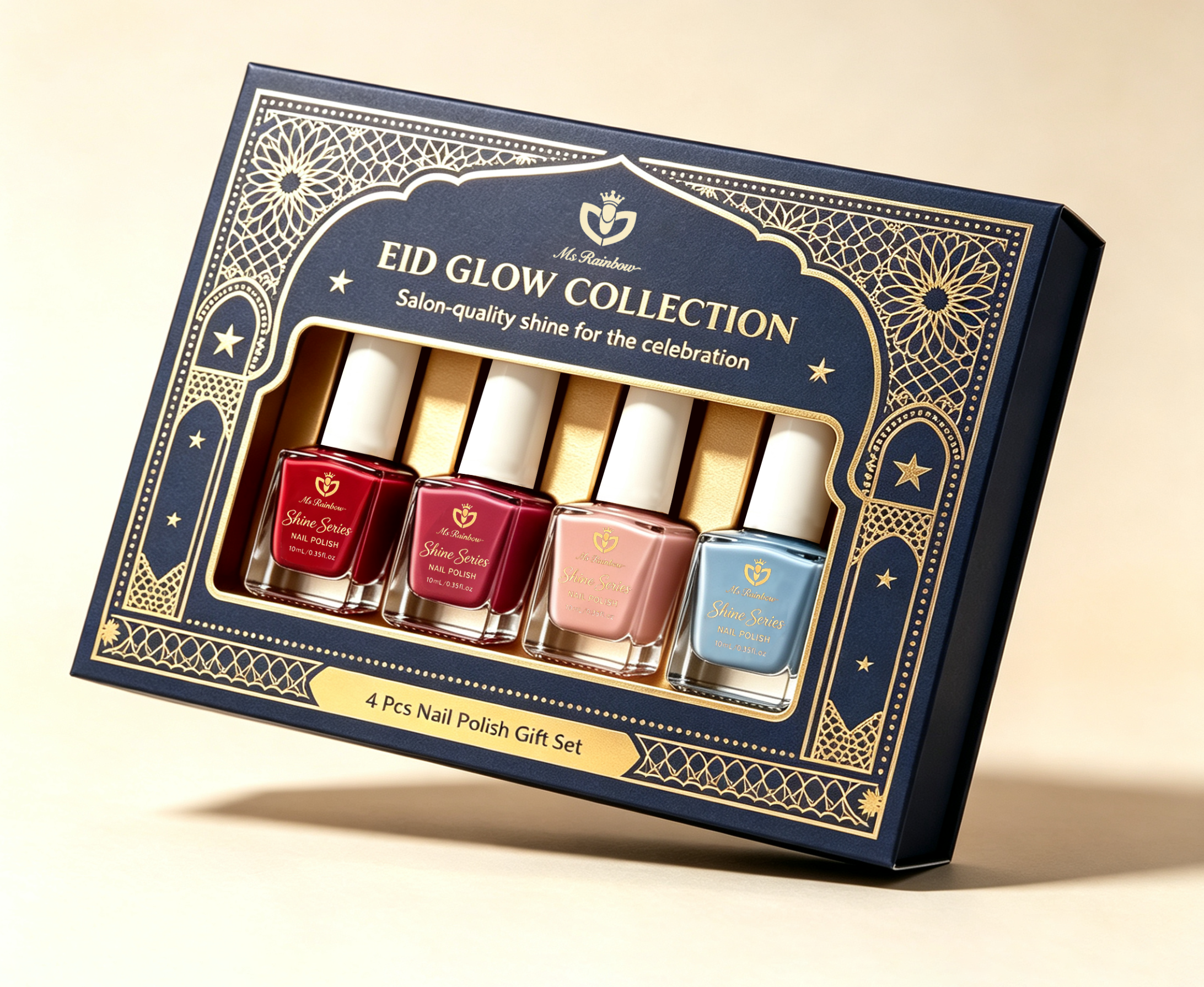
Manufacturers serving this category — including the team behind Ms Rainbow water-based peel-off nail polish and the Ms Rasinbow Lucky Candy keychain nail varnish format — have positioned their kid-facing lines around water-based, peel-off chemistry and TPO-free, HEMA-free formulation principles. That positioning is a good starting point, particularly for buyers building pregnancy-safe and children's ranges.
But positioning is not proof. The buyers who avoid recalls in 2027 will be the ones who pair a supplier's formulation claims with batch-linked, film-level test documentation — and who insist that a claim such as "kid-safe" is backed by a named standard, a named laboratory and a date.
Final Word: The Buying Decision Is a Testing Decision
Peel-off gel nail polish is a genuinely useful innovation — no remover, no mess, no nail damage — and it has opened a legitimate, fast-growing segment for kids' and novelty beauty. The category is not the problem. The problem is that the testing strategy used for ordinary nail polish was never designed for a product that ends up in a child's mouth.
Three hazards — the wrong standard, the untested dried film, and paperwork disconnected from production — account for most of the market failures in this segment. Buyers who screen for all three will get a product that performs commercially and survives compliance scrutiny. Everyone else is gambling on a claim written by the seller.
Peel-off gel nail polish Safe nail gel for kids Harmful substance testing Water-based nail polish Keychain nail polish TPO-free HEMA-free EN 71-3 migration CPSIA and ASTM F963